 PL
PL EN
EN#3Demons and Survivors
Genocide of Polish civilians in Volhynia and Eastern Galicia - World War II.
I cordially invite you to the third episode of the Wilcze Echa series, titled Demons and Survivors. In this episode, I will discuss the events in Volhynia and Eastern Małopolska during World War II, based on a review of the film Volhynia, directed by Wojciech Smarzowski, and an interview with Dr. Joanna Karbarz-Wilińska, co-editor of the collection of accounts "Survivors of Genocide. Memories of Poles from Volhynia."
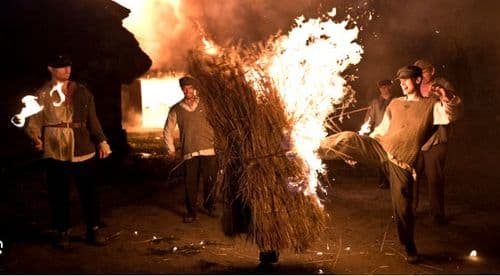 A fragment from the film VolhyniaWho were the victims and why did the genocide take place? Who were their executioners, for whom the name "Demons" is exceptionally benign, and why were they so cruel? Did anyone survive this tragedy?
In 2016, director Wojciech Smarzowski released the beautiful yet terrifying film "Wołyń." The director of "Wołyń" shows, above all, that
[...] the mass murder of Poles was not an expression of popular rebellion, but a carefully planned operation in which the UPA and OUN were supposed to use only peasant axes.
[...] The symbolic funeral of the Republic, like the ceremony of consecrating axes, hatchets, scythes, and sickles in the Greek Catholic Church, is the final sealing of the fate of the as-yet-unconscious victims.
The director of "Wołyń" adheres to testimonies from this period and relies on eyewitness accounts, which cannot be disputed because they depict real events. It is very important to convey the message that not all Ukrainians wanted to murder Poles and not all agreed to it, even when they set off with the mob to the bloody harvest.
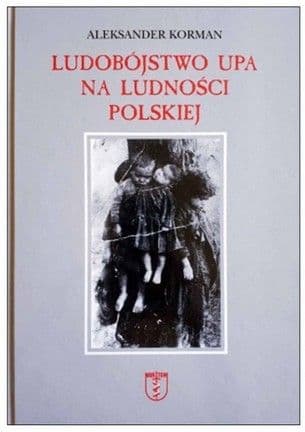 A book by Aleksander KormanThe late Aleksander Korman, a researcher of the Volhynian genocide who served in local Kresy self-defense units during World War II, collected and recorded 362 methods of physical torture and death inflicted on Poles at the hands of Ukrainians.
It's impossible to read this in one sitting, reading the gruesome list of evidence of almost unimaginable human (or rather, satanic) cruelty. Nailing skulls, cutting off fingers, hands, noses, ears, and heads, slicing open the bellies of pregnant women, nailing infants to tables with bayonets and throwing them into flames, crucifixion on doors, flaying, and being torn apart by horses...
Kresy community groups published a pamphlet presenting over 100 methods of murdering Poles, documented with locations, numbers, and dates. Even the list of physical torture and deaths committed by the cruel Germans reportedly contained around 40 items.
 Ukrainian victims - The Jasionczak familyThe question arises: why was the Volhynian massacre so brutal? Descriptions of the crimes read:
[...] Thousands of victims hacked to death with axes, sawn alive, or nailed to huts. The brutality of the crimes committed by Ukrainians against Poles in 1943-1944 is overwhelming.
[...] Descriptions of brutality and the elaborate torture inflicted on the victims are an integral part of the narrative of the anti-Polish purges carried out by members of the Organization of Ukrainian Nationalists-Bandera (OUN-B) and the Ukrainian Insurgent Army (UPA). They are deeply moving, haunting, and overwhelming, making any attempt to explain what happened seem trivial and banal, even indifferent to the evil committed.
In further considerations, I will quote excerpts from an interview conducted on July 8, 2023, with Dr. Joanna Karbarz-Wilińska from the Institute of National Remembrance, co-editor of the collection of accounts "Survivors of Genocide. Memories of Poles from Volhynia."
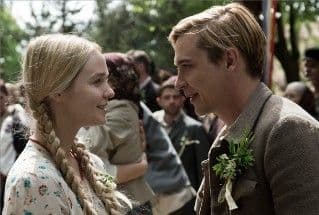 A fragment from the film VolhyniaWere the victims aware of the danger they faced? Dr. J. Karbarz-Wilińska says:
[...] The mass crimes that took place in 1943 came as a huge surprise to the Poles. They could not believe that their Ukrainian neighbors, whom they knew well and with whom they lived in harmony, as evidenced by the fact that they helped each other with field work, participated in joint ceremonies, attended churches, and—finally—entered into Polish-Ukrainian marriages, could commit such gruesome murders.
Dr. Joanna Karbarz-Wilińska continues:
[...] We have published 85 accounts by witnesses to the genocide. Among them are those that contain recollections of Ukrainian nationalists preparing to commit the crime.
From these accounts, we learn of individual murders of Poles committed by OUN activists as early as the autumn of 1939 and in 1941-1942. At that time, they mainly concerned representatives of local Polish elites – teachers and foresters.
The professor describes Polish-Ukrainian relations before the genocide:
[...] Poles, considering that they had lived alongside Ukrainians in the southeastern territories of the Second Polish Republic for generations, did not anticipate the explosion of hatred on their part, much less that it would take such a tragic course. They also likely did not know that Ukrainian nationalists had already actively participated in the murder of Jews in 1941, carried out by units of the Ukrainian Auxiliary Police formed by the Germans. The awareness that they bore no responsibility for this may have emboldened the future perpetrators of Volhynia and Eastern Lesser Poland to repeat the crimes against other nationalities.
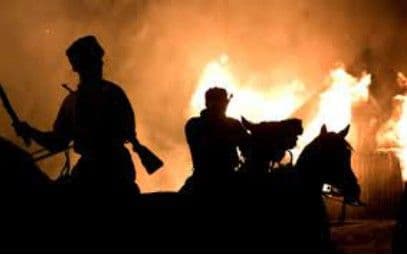 A fragment from the film VolhyniaRegarding Ukrainians saving Poles, the professor says:
[...] Let us remember, however, that not all Ukrainians succumbed to nationalist ideology, which became the main cause of genocide in Volhynia and Eastern Lesser Poland, but also in the Polesie, Lublin, and Kraków voivodeships (though not throughout their entire territories). A few Poles found refuge among the righteous Ukrainians, and survivors recount this in the accounts included in our published volume.
[...] However, we must remember that the scale of aid to Poles could not have been large, because Ukrainian nationalists murdered not only members of national minorities but also their own compatriots who did not side with them. Those Ukrainians who decided to help their Polish neighbors had to reckon with the fact that they too faced the death penalty at the hands of members of the OUN and UPA. They could also be brutally murdered simply for refusing to join these organizations.
[...] Most Poles survived the genocide thanks to the help of the aforementioned Ukrainians, who, for example, warned them of the approaching band of murderers or hid Poles in their homes or farm buildings. Considering the terror that members of the OUN and UPA inflicted on anyone who opposed them, the resistance to the criminal ideology and the humanity that prevailed among some of the Ukrainian population were almost acts of immense heroism.
-500x498.jpg&w=1080&q=75) Symbolism of the OUN (Banderites – emblem)On Ukrainian peasants who adhered to Bandera's ideology:
Symbolism of the OUN (Banderites – emblem)On Ukrainian peasants who adhered to Bandera's ideology:
[...] From today's perspective, it is difficult to understand not so much the motivations of those who saved Poles, but those of Ukrainian peasants who succumbed to OUN propaganda and moved against truly innocent people – women, children, the elderly, and men with whom they had often previously maintained good neighborly relations.
[...] Let us remember, however, that this hatred of Poles had been instilled in their compatriots by Ukrainian nationalists since the 1930s. Even then, they spoke of the need to "get rid of the Lakhs" and create a nationally unified Ukrainian state – "pure as a glass of water."
[...] This hostility towards Poles was thus spread for a very long time. This is reminiscent of the method used by the German Nazis, who were remarkably effective in persuading Germans to hate Jews and other nationalities deemed unworthy of life.
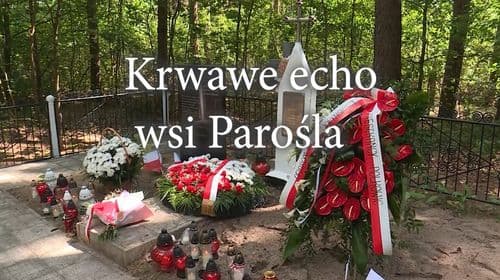 The bloody echo of the village of ParoślaWhen did the collection of accounts of the crimes in Volhynia and Eastern Lesser Poland begin?
It wasn't until February 1985 that the documentation of the memoirs began. A total of 62 accounts were collected and published in a collection published by the Institute of National Remembrance (IPN).
[...] The accounts are arranged according to the division of Volhynia into counties and the chronology of attacks on Polish villages, which began in February 1943 with the attack on the village of Parośla in Sarny County. In the following weeks, murders occurred in the Kostopol, Rivne, Zdołbun, and Krzemieniec counties.
[...] In June, they spread to the Dubno and Lutsk counties, while July saw the peak of the crimes. At that time, UPA gangs attacked almost simultaneously about 100 towns, mainly in the Vladimir and Horochiv counties, but also in Kovel, and from August 1943, mass crimes were also committed in the Luboml county.
[...] Let us also remember that in 1944, the massacres spread across Eastern Lesser Poland and, among other regions, the Lublin region. As a result, according to conservative estimates, over 100,000 people died – the vast majority of them Poles. However, it is worth emphasizing once again that Ukrainian nationalists also killed their own compatriots who did not support the murderous ideology.
The doctor states that the accounts of witnesses to the crimes focus primarily on their dramatic events, but they also convey the conviction that we must speak of the victims and never forget them.
 Commemoration of the 80th anniversary of the Volhynia genocide, WrocławHere are my reflections from the commemoration of the 80th anniversary of the genocide in Volhynia and Eastern Lesser Poland on July 11, 2023, in Warsaw.
The actions of our government during the commemoration of the 80th anniversary of the genocide in Volhynia and Eastern Lesser Poland are beyond embarrassing. The signing on July 7 of a joint statement by Archbishop Stanisław Gądecki and the head of the Ukrainian Greek Catholic Church, Archbishop Sviatoslav Shevchuk, titled "Forgiveness and Reconciliation" is a mockery and a farce.
 On July 7, 2023, Archbishop Stanisław Gądecki and Archbishop Sviatoslav Shevchuk, head of the Ukrainian Greek Catholic Church, signed the Forgiveness and Reconciliation Agreement.No one except the families of the murdered victims of genocide has the RIGHT to sign any documents on their behalf. The unforgivable cannot be forgiven, especially since it was committed with unimaginable cruelty and on such a massive scale. This was a genocidal massacre of Polish women, children, elderly people, and men.
 Polish Prime Minister Mateusz Morawiecki places a cross in a field, July 2023Our Prime Minister joins this "muppet show" by burying a cross made of sticks somewhere in a field. This is a mockery. No grand words, promises, or children's theater can replace decisive action by a government accountable to Polish citizens.
Here is a preliminary list of actions the government owes, first and foremost to the families of the genocide victims and the victims themselves, but also to all Poles around the world:
1. The Polish government should immediately request permission from Ukraine for exhumations and initiate a prosecutorial and judicial investigation to identify the perpetrators of the genocide.
2. The Ukrainian government must acknowledge the crime, demonstrate remorse, and destroy all signs of flag worship.
3. Without meeting these conditions, neither reconciliation nor cooperation with that country is possible.
The only condition for reconciliation is the TRUTH, and this must be revealed and accepted.
Of course, these actions may take years, but that doesn't change the fact that they must begin immediately. There are plenty of arguments for discussion, such as benefits for Ukrainian immigrants, free transfers of weapons and other goods to Ukraine, and others, but let's leave that to the diplomats and politicians who are supposed to represent our national interests RELIABLY.
 International Court of Justice in The HagueConsideration should also be given to reporting the genocide to the International Court of Justice in The Hague, the principal judicial body of the United Nations (UN). It turns out that, in practice, obtaining permission for exhumations in Ukraine is quite possible, even during a war with Russia. According to unofficial information, countries such as Germany and Israel are conducting exhumations of their victims during this period.
History clearly indicates that there were earlier times when Ukrainians, as Rusyn peoples called Cossacks, brutally murdered Poles, such as during the Cossack uprisings and the Khmelnytsky Uprising. Ukrainians grew up in a completely different culture, one that has nothing in common with the Polish culture derived from Latin civilization. Therefore, invoking our values in relation to Ukrainians is completely false and, worst of all, detrimental to our country's interests, a fact our authorities seem oblivious to.
Ukrainians refuse to acknowledge the cruel genocidal murders committed by their fathers and grandfathers. Not only do they deny historical facts, but they even commemorate Ukrainian UPA and OUN leaders like Stephan Bandera, Roman Shukhevych, and others. It is disturbing that the cult of Bandera was and is supported by certain circles in the United Kingdom, the United States, and Canada. In Canada, there are Ukrainian nationalist organizations that promote hatred of Poles and all things Polish. These facts call into question the supposed friendship of the Anglo-Saxons, which has been instilled in us for over 30 years by successive governments.
I cordially invite you to watch the next episode, Episode 4, titled "The Devil's Secret."
Photo source: Wikipedia and www.filmweb.pl