 PL
PL EN
EN#10The Polesian Mystery
Ukrainian crimes in Belarus.
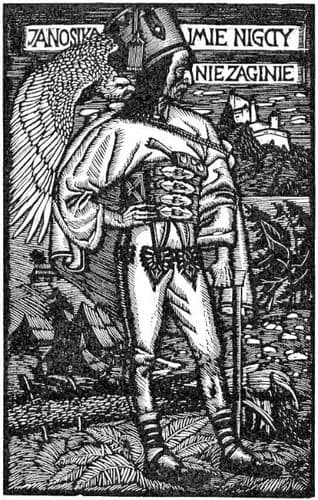 The noble robber Janosik according to PolesMore than 330 years ago, on January 25, 1688, Slovak Juraj Jánošík was born in the village of Terchová, near Žilina. At the age of 15, Juraj participated in the anti-Habsburg uprising of Franz Rákóczi, which broke out in Hungary in 1703. When he returned to his home village in 1708, instead of working as a farmer, he decided to join the Austrian army. While serving as a guard at Bytča Castle, he met Tomáš Uhorčík, a harnas of Carpathian bandits. In October 1710, Juraj Jánošík helped him escape from prison, and the following month, he abandoned the army and joined his band of bandits. From that moment on, Jánošík's bandit activities began, lasting until the spring of 1713. Jánošík and his group operated on the Hungarian-Polish border, and the victims of his attacks were primarily merchants, parish priests, postal messengers, and other wealthy individuals. Slovaks viewed Jánošík as either a common bandit or a noble robber, while in Poland only the positive version was known. Until recently, the prevailing belief in Podhale was that he was Polish and operated on the Polish side of the mountains. Jánošík appeared on the Slovak 500-koruna banknote in 1944, and since 2009, March 26 has been established as the Liturgical Commemoration of the Good Thief and the Day of Prayer for Prisoners, also known as Jánošík Day.
 Ukrainian criminal Taras Bulba-Borovets, 1941Over 100 years ago, on March 9, 1908, in the settlement of Bystrzyca near Ludvipol in Volhynia, Taras Borovets was born, a man who posed as a national hero in photographs but possessed none of the characteristics of the noble Janosik. Despite this, Taras Borovets is glorified to this day and occupies a prominent place in the Ukrainian pantheon of heroes. Borovets, nicknamed "Taras Bulba," was a Ukrainian political activist. In 1933, he founded the secret military-revolutionary organization Ukrainian National Revival. The organization founded by Taras Borovets aimed to fight against the alleged Polish occupier and Moscow's colonialism. Borovets's political activities were terrorist in nature and directed against the Polish state authorities and the Soviet Union. For his anti-state activities, Borovets was imprisoned in Bereza Kartuska, where he remained until September 1939.
-388x500.jpg&w=828&q=75) Dmytro Klyachkivsky (1911-1945)In late 1942, the Organization of Ukrainian Nationalists (OUN-B, Stepan Bandera's faction) decided to form an army for its "Ukrainian National Revolution." The decision was made at an OUN conference in November 1942, and the details were finalized in December of the same year. The first army units were formed in February 1943 in Volhynia, where Dmytro Kliachkivskyi (alias Klym Savur) commanded the OUN-B. Initially, the army was called the "Ukrainian Liberation Army," and after April and May 1943, its name was changed to the Ukrainian Insurgent Army (UPA).
Dmytro Klyachkivsky (1911-1945)In late 1942, the Organization of Ukrainian Nationalists (OUN-B, Stepan Bandera's faction) decided to form an army for its "Ukrainian National Revolution." The decision was made at an OUN conference in November 1942, and the details were finalized in December of the same year. The first army units were formed in February 1943 in Volhynia, where Dmytro Kliachkivskyi (alias Klym Savur) commanded the OUN-B. Initially, the army was called the "Ukrainian Liberation Army," and after April and May 1943, its name was changed to the Ukrainian Insurgent Army (UPA).
 Meeting of Germans with Ukrainian collaborators from the 201st Schutzmannschaft BattalionBetween March 19 and April 14, 1943 alone, of the total of 12,000 Ukrainian policemen from Volhynia, approximately 5,000 joined the UPA. Others who joined the UPA were Ukrainians experienced in mass murder of civilians, having previously served in Schutzmannschaft Battalion 201, which was disbanded on December 31, 1942. Battalion 201 was formed from the Nachtigall and Roland battalions in late 1941 and was sent to Belarus in 1942 for partisan warfare. Extant documents indicate that most of the people killed in Belarus by Battalion 201 and other German-Ukrainian Schutzmannschaft battalions were not partisans, but civilians. Many sources also confirm that there was an informal non-aggression agreement between the UPA and the "red partisan" units, at least until 1943.
%2520w%2520Batalionie%2520201%252C%25201942-500x313.jpg&w=1080&q=75) Roman Shukhevych (bottom 2nd from left) in Battalion 201, 1942Some members of Battalion 201, such as Roman Shukhevych and Vasyl Sydor, held leadership positions in the UPA. After the battalion disbanded, many Ukrainians joined the Waffen-SS Galizien units. Ivan Katchanovsky estimates that 46% of Ukrainians in the OUN and UPA served in the local Ukrainian police, in Schutzmannschaft Battalion 201, or in Waffen-SS Galizien units.
Roman Shukhevych (bottom 2nd from left) in Battalion 201, 1942Some members of Battalion 201, such as Roman Shukhevych and Vasyl Sydor, held leadership positions in the UPA. After the battalion disbanded, many Ukrainians joined the Waffen-SS Galizien units. Ivan Katchanovsky estimates that 46% of Ukrainians in the OUN and UPA served in the local Ukrainian police, in Schutzmannschaft Battalion 201, or in Waffen-SS Galizien units.
 Danylo Shumuk (1914-2004) author of "Life Sentence, Memoirs of a Ukrainian Political Prisoner"UPA partisans received a comprehensive ideological education, which was "saturated with the spirit of fanaticism," as Danylo Shumuk recalls. While in the UPA, they attended ideology classes where, among other things, they memorized the "Decalogue of a Ukrainian Nationalist" and the "44 Rules of Life of a Ukrainian Nationalist." They were also instilled with the belief that they could commit mass murder against other ethnic groups because those groups had allegedly wronged Ukrainians in the past.
-388x500.jpg&w=828&q=75) Andriy Livytskyi (1879-1954) president of the Ukrainian People's Republic in exileFollowing the Third Reich and USSR's aggression against Poland, Bulba organized a Ukrainian armed underground in the form of the "Polesian Sich" in the northern Volhynian Voivodeship (occupied by the USSR) in 1940–1941, on the orders of Andriy Livytsky, President of the Ukrainian People's Republic in exile.
Andriy Livytskyi (1879-1954) president of the Ukrainian People's Republic in exileFollowing the Third Reich and USSR's aggression against Poland, Bulba organized a Ukrainian armed underground in the form of the "Polesian Sich" in the northern Volhynian Voivodeship (occupied by the USSR) in 1940–1941, on the orders of Andriy Livytsky, President of the Ukrainian People's Republic in exile.
[...] He continued and expanded the underground following the Third Reich's attack on the USSR, creating a political vacuum within the territory of the Polesian Sich, which was tolerated by the Germans due to their effective suppression of Soviet sabotage.
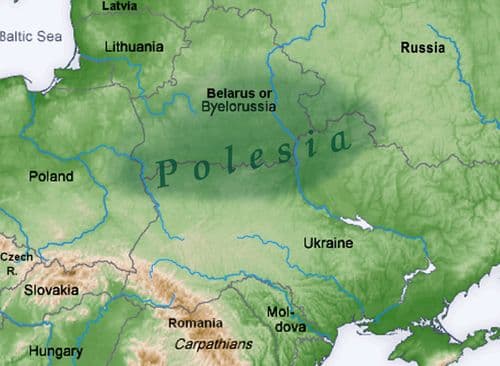 Map of PolesieDuring the so-called Ukrainian National Revolution, acts of genocide perpetrated by Ukrainians, some Poles managed to escape their oppressors to Polesie (modern-day Belarus), but there they were also murdered by units of the Polesie Sich commanded by Ataman Taras Bulba. Soviet partisans, known as the "Reds," which also included Poles, attempted to protect Polish families from the Banderites and the bandits of the Polesie Sich, which operated as illegal Ukrainian criminal armed organizations. In Polesie, a Polish unit named after Tadeusz Kościuszko existed within the Red units, fighting alongside the Russians against Ukrainians.
Archives from that time clearly indicate that the genocide against Poles was perpetrated at the instigation of the Germans, who decided to create a free Ukrainian Cossacks. The free Cossacks' mission was to annihilate all Poles.
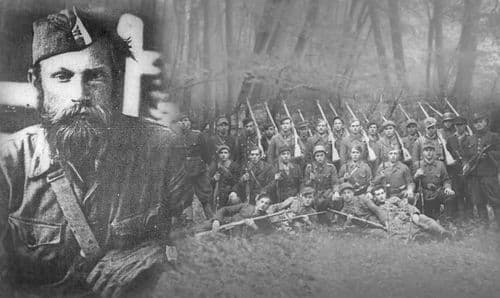 Ataman Taras Borovets (Bulba) and his unit of "bulbowcy"Taras Bulba's gangs, known as "bulbowcy," invaded Polesie, murdering entire Polish families, from a few to a dozen or so.
[...] The bandits chopped off the heads of Poles, and later also those of Soviet partisans, as in the times of Ivan the Terrible, and hung them on fences in villages. They divided the stolen Polish property and land between themselves and the peasants. The bandits stationed themselves in villages and forests between Kostopol and Rivne, burning Polish villages and murdering the inhabitants.
For example, on the night of February 7-8, 1943, Banderites attacked the village of Buteyki. I will not describe the horrific images of genocide from that day, when six people were murdered, but I will only quote the last three sentences from witness accounts:
[...] No one had any inkling that this night would be the last of their lives. That night, Banderites (bulbowcy) broke into the palace. They tied everyone up with barbed wire and chopped off everyone's heads, without exception.
The Bulb members attacked the village of Buteyko alone repeatedly, from February to September 1943, murdering a total of 28 people. Taras's gangs attacked more than just villages. In July 1944, Ukrainian nationalists captured the town of Kamień Koszyrski. They achieved this with the help of the Germans, who handed over caches of weapons and ammunition. The Ukrainians murdered the inhabitants, many of them Poles.
The list of murders committed by the Bulb members is very long and certainly incomplete, requiring decisive action by the Polish government and a request for the exhumation of the victims of the genocide in Polesie as well.
 The Red Army entering Poland, September 17, 1939The Red partisan headquarters sent leaflets to the Ukrainian UPA calling on them to stop murdering Poles under severe penalties, but the calls were ignored. Soviet partisans also called on the UPA to join the fight against the Germans, but to no avail.
[...] The Bulb members' fight against the Germans was limited to stealing their horses.
 The Jewish Shtofer family from Olevsk, in the 1930sThe Polesie Sich and the UPA's attitude toward Jews was no different from that of the OUN. UPA bandits persecuted Jews and committed pogroms, for example, in the summer of 1941 in Olevsk. During the attack, some members of the Polesie Sich, along with local Ukrainian policemen and Germans, killed many Jews in a mass shooting on November 19-20, 1941.
-410x500.jpg&w=828&q=75) A plaque commemorating the death march of prisoners from the Sachsenhausen concentration camp (1939-1945)After the Ukrainian National Revolution (i.e., genocide), the Germans neither restricted nor persecuted members of the UPA (Ukrainian Insurgent Army) or the Polesian Sich. Sources indicate that on December 1, 1943, in Warsaw, when Taras Bulba (Borowec) proposed collaboration with the Germans, he was arrested and sent to the Sachsenhausen concentration camp for political prisoners. Without going into detail about whether this was an actual or simulated arrest, the Germans released Borovets in September 1944, in connection with the idea of establishing a Ukrainian National Army. The Germans promoted Borovets to the rank of general of the UNA (Ukrainian National Army) and appointed him commander of the newly formed Parachute Brigade "Groupe B."
A plaque commemorating the death march of prisoners from the Sachsenhausen concentration camp (1939-1945)After the Ukrainian National Revolution (i.e., genocide), the Germans neither restricted nor persecuted members of the UPA (Ukrainian Insurgent Army) or the Polesian Sich. Sources indicate that on December 1, 1943, in Warsaw, when Taras Bulba (Borowec) proposed collaboration with the Germans, he was arrested and sent to the Sachsenhausen concentration camp for political prisoners. Without going into detail about whether this was an actual or simulated arrest, the Germans released Borovets in September 1944, in connection with the idea of establishing a Ukrainian National Army. The Germans promoted Borovets to the rank of general of the UNA (Ukrainian National Army) and appointed him commander of the newly formed Parachute Brigade "Groupe B."
 Courtroom of the Supreme Court of the United Kingdom, LondonAfter the fall of the Third Reich, Borovets was found on August 19, 1945, by British forces in their occupation zone. He was detained there, among other charges, on charges of committing crimes against Polish civilians. The investigation determined that Bulba's subordinate units had not participated in the murder of ethnic minorities in Ukraine, and that the Bandera supporters alone were to blame.
Taras Bulba's Polesian Sich units murdered Poles primarily in Belarus, but the British court "forgot" this "detail." Borovets was ultimately released on August 14, 1946.
 The location of the criminal Taras Bulba-Borovets after World War II, Toronto, CanadaFrom 1948, Taras Borovets lived in exile in Canada, among a multitude of Ukrainian nationalists, members of the SS Galician units, and other Ukrainian criminals whose "relocation" was aided by, among others, the American CIA.
Borovets even became a writer and wrote the book "Army Without a Lease: The Glory and Tragedy of the Ukrainian Insurgent Movement." He died peacefully on May 15, 1981, in Toronto, Canada.
My dear friends, I am horrified by the impunity of Ukrainian criminals, protected by Anglo-Saxon and German sponsors. As you can imagine, the list of unpunished criminals is much longer and difficult to comprehend. The worst is the concealment of historical truth and the manipulation of facts by successive "Polish" governments. The truth must be revealed for the sake of remembering the Polish victims of the Ukrainian genocide. Only truth and memory passed down from generation to generation will help us avoid similar crimes in the future. Because all governments since 1989 have failed Poland and the Polish people, they do not deserve to be called Polish governments, in terms of national memory and efforts to exhume Polish citizens brutally murdered by Ukrainians between 1939 and 1947 (1948). Politicians can only be judged by their actions, not declarations, promises, or television dramas.
This concludes episode 10, "The Polesian Mystery," in which I described the horrific events in Polesie in the 1940s. I cordially invite you to the next episode, "Wilcze Echa," titled "Miraculous Conversion."
Photo source: Wikipedia