 PL
PL EN
EN#14Washington Revelry
Connections between Ukrainian nationalists and US congressmen.
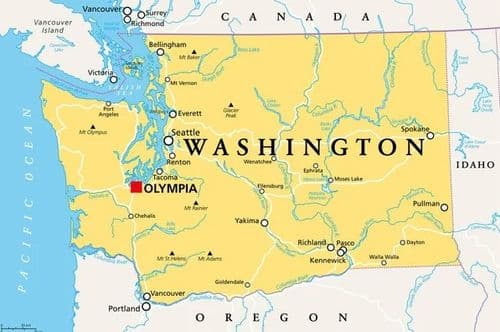 Map of Washington D.C.236 years ago, on July 16, 1790, the Residence Act established that the new capital of the United States would be located on the Potomac River, with President Washington designating its exact location. According to the Constitution, the District was initially designed as a square measuring 10 miles (16 km) on each side, giving it a total area of 100 square miles (260 km²). Thus, the city of Washington, D.C., became the capital of the United States. The abbreviation "District of Columbia" stands for District of Columbia, as the city was located within the Territory of Columbia. Washington is overseen by the mayor and a thirteen-member city council, but ultimate power rests with Congress, which can amend local laws at will. Therefore, its residents have fewer opportunities for self-government than in states. The District lacks the right to elect a delegate to Congress and is not entitled to seats in the Senate. Washingtonians were barred from participating in presidential elections until the ratification of the 23rd Amendment to the United States Constitution in 1961. Since then, they have had this right, and the District of Columbia has been entitled to three electors. Washington has a fascinating and turbulent history, but one thing is certain: the American flag always flies over the White House. Few people, however, are aware that on July 11, 1982, a completely different flag was flown alongside the American flag, the appearance of which would surprise not only historians.
 Headquarters of the Permanent Mission of Russia to the UNSince 1959, every year on October 15th, Ukrainians from the OUN, adhering to nationalist-fascist ideology, have, thanks to financial resources provided by sponsors and patrons, organized mourning ceremonies almost everywhere in the world to commemorate the death of their leader, Stepan Bandera.
In 1979: [...] As before, commemorations and demonstrations were held on the twentieth anniversary of Bandera's assassination in many other cities. In London, Ukrainians demonstrated with pro-Bandera and anti-Soviet posters in front of the Soviet Embassy. In New York, Ukrainian dissident Valentin Moroz set fire to a Soviet flag during an ABN demonstration in front of the Soviet mission to the UN. The youth magazine Avangard published a drawing of Bandera's head rising from a cross bearing the inscription "Revenge Will Come!". Special commemorative bronze medals were also minted to mark the twentieth anniversary of Bandera's death.
 Nowadays, Hasidic Jews express their support for Ukraine by proclaiming slogans like "Long live Zelensky, We love Ukraine"What was the Jewish attitude toward the Bandera cult after his death?
[...] Ukrainian nationalists generally did not consider how Jews might perceive the cult of the so-called Provydnik, that is, what they thought of the ritualized denial of the atrocities and war crimes committed by Ukrainian insurgents and police during World War II.
However, in November 1979, Homin Ukraïny proudly informed its leaders on its front page that, shortly before the twentieth anniversary of Bandera's death, the Committee for Ukrainian-Jewish Cooperation in Jerusalem had sent a telegram expressing sympathy. The committee was founded in 1979 by Ukrainian Jewish emigrants and headed by Iakov Suslenskyi.
Note: On November 1, 1918, the Jewish Committee for Public Security was established in Lviv, an institution created during the Polish-Ukrainian fighting in 1918, with the aim of protecting the city's Jewish population. This committee established its own militia, numbering approximately 300 people. The militia commander was Juliusz Eisler. Some Jewish militia officers supported and even openly collaborated with the Ukrainians.
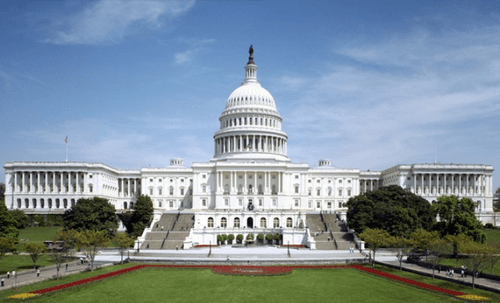 The White House, Washington, USAThe period between anniversary celebrations was also full of fascinating events. Here's one such event, which took place in July 1982.
[...] During the Captive Nations Week in July 1982, representatives of the UPA and other North American Ukrainian nationalist organizations were invited to Washington to celebrate the fortieth anniversary of the UPA's founding with thirty congressmen. According to the Ukrainian newspaper "Path to Victory" (Shliakh peremohy), controlled by the OUN, on July 11, 1982, the UPA flag flew over the US capital. This flag was the red and black flag of the OUN-B, which had been introduced at the Second Great Congress of Ukrainian Nationalists in Krakow in March-April 1941.
One can only imagine the pomp and circumstance of the event in Washington, organized by thirty congressmen. This event is clear evidence of the very close, perhaps even cordial, ties between Ukrainian criminals and the United States Congress. As if that weren't enough, the Ukrainian nationalists of the OUN (Oun) flew their red and black flag over the White House.
This also answers the question of where the "idea" of flying Ukrainian flags at Polish government offices came from. The only difference is that in 1982, Ukrainians flew the Bandera flag only once over the White House, while in Poland, the Ukrainian flag can be found at almost every Polish office since February 24, 2022. The question arises, however, how many Polish flags have Ukrainians flown at their government offices? The answer: none.
-372x500.png&w=750&q=75) Josyf Ivanovych Slipyj (1892-1984)Clergy were also present at the party, and it's easy to guess which Church they represented.
Josyf Ivanovych Slipyj (1892-1984)Clergy were also present at the party, and it's easy to guess which Church they represented.
[...] Iosyf Slipyi, patriarch of the Greek Catholic Church, also appeared in Washington, the same one who, on June 30, 1941, attended the meeting where Stetsko announced the establishment of the Ukrainian state.
Slipyi, living in exile after being released by the Soviet authorities in 1963, declared on the occasion of the fortieth anniversary of the founding of the UPA:
[...] The Ukrainian Insurgent Army was born out of Christian consciousness, the need to fight Satan and his earthly servants.
My dear friends, I am shocked by the audacity of clergyman Iosyf Slipyi, who not only uttered a blatant lie but completely distorted historical facts. The UPA criminals were never interested in any Christian consciousness, and it's they who can, without exaggeration, be called servants of Satan. But what can one expect from a representative of the Greek Catholic Church who, during the genocide in Volhynia and Eastern Galicia, called for the murder of Poles?
-183x240.jpg&w=384&q=75) George Herbert Walker Bush (1924-2018)
George Herbert Walker Bush (1924-2018)
-190x237.jpg&w=384&q=75) Ronald Wilson Regan (1911-2004)
Ronald Wilson Regan (1911-2004)
Shortly after the ravel, more protectors of the Bandera cult appeared in Washington.
[...] A year later, on the twenty-fifth anniversary of the founding of the Captive Nations and the fortieth anniversary of the National Security Agency (ANN), Stetsko, the head of the NSB and the OUN, was invited to Congress. On July 18, 1983, Vice President George Bush received the "last prime minister of the free Ukrainian state," as Stetsko continued to call himself. A day later, President Reagan received Stetsko at the White House.
 Meeting of the Garden of Ukrainian Culture organization, Cleveland, Ohio, USA 1940Ukrainian nationalists established themselves in the United States even before the outbreak of World War II. Under the guise of cultural gatherings, Ukrainian nationalist ideology was promoted and Bandera symbolism was used (as in the photo). Therefore, Ukrainian American organizations quickly gained access to the United States Congress and the White House.
[...] In 1982, the Ukrainian community in Cleveland began raising money for a monument dedicated to UPA soldiers, which to this day bears the inscription: "There is no greater love than to lay down one's life for one's friends."
Before the fundraising campaign began in Cleveland, other Ukrainian communities around the world had already erected several similar monuments. For example, in 1973 in Edmonton:
[...] a bust of Roman Shukhevych in uniform, by sculptor Chereshovskyi, was unveiled in front of the massive Ukrainian Youth Complex.
 Monument to the Waffen-SS "Galicia" unit and Ukrainian pro-fascist units in Canada, erected in 1988, removed in 2022-24In addition to erecting monuments to famous OUN leaders, Ukrainian nationalists in exile honored them publicly. For example:
[...] On June 22, 1980, on the 30th anniversary of Shukhevych's death, 6,000 Ukrainian nationalists from Chicago, Detroit, Montreal, Munich, New York, Ottawa, Pittsburgh, and other American cities gathered in Toronto to participate in a religious memorial service.
[...] In 1988, an association of former UPA soldiers unveiled a monument in Oakville, Ontario, Canada, dedicated to the "glory of the UPA." Carved into a piece of rock, it depicted a UPA insurgent in uniform with a huge trident behind him.
The list of activities of OUN nationalists is very long. Soon, museums dedicated to Provydnik began to open. The first Bandera museum opened on October 20, 1962, in Nottingham, England, the day after the verdict in the Bohdan Staszynsky trial was announced.
[...] The main objects in the museum were Bandera's personal belongings. The OUN considered Great Britain a safer place for these supposedly "sacred" objects than Munich.
 Stepan Bandera Museum in London, UKA few words about the museum...
[...] In 1978, the museum was moved to London and opened on October 6, 1979.
The museum was never intended for the general public, but served as a place of pilgrimage for initiated Ukrainian nationalists. The two central exhibits in this museum are Bandera's death mask and the clothes he wore when murdered. His suit and shirt bear traces of the blood that "spurted" when Stashinsky fired a potassium cyanide capsule into his face.
[...] The main purpose of such a reenactment is to exaggerate the moment of murder, symbolizing the destruction of Ukraine and Ukrainians by Soviet oppressors.
The monstrous crimes of genocide committed against Poles and other nationalities living in the Eastern Borderlands are unforgivable, and we must not forget the unimaginable cruelty of Ukrainian criminals. It's also important to remember that not all Ukrainians living at that time adhered to the criminal ideology of the OUN. Many of them helped Poles and other victims, for which they were often killed by their own compatriots.
However, the question arises: why did Ukrainian peasants participate in such mass crimes? I will attempt to answer this question in the next episode. This concludes episode 14, and I invite you to episode 15, titled "Clash of Civilizations."
Photo source: Wikipedia