 PL
PL EN
EN#15Clash of Civilizations
Civilizational differences between Poles and Ukrainians.
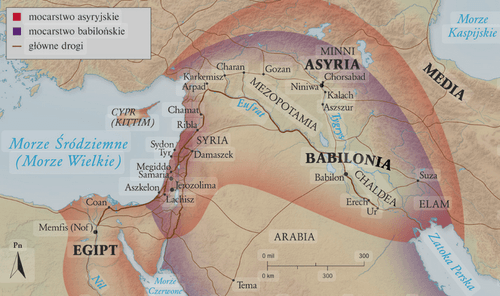 Ancient MesopotamiaOn the banks of the Tigris and Euphrates rivers, in what is now Iraq and Kuwait, a land called Mesopotamia flourished in ancient times. Many ancient civilizations developed in Mesopotamia, including the Sumerians, Assyrians, Akkadians, and Babylonians. The peoples of these civilizations cooperated, conquered, and intertwined for thousands of years. Much evidence has been found demonstrating the crucial role of technology, literature, law, philosophy, religion, and architecture in the daily lives of these societies. For example, the Sumerians, whose civilization took shape in southern Mesopotamia around 4,000 BCE, created the first urban civilization. Around 3,000 BCE, cuneiform writing emerged, consisting of embossing characters into soft clay with a triangular stylus. Local peoples adapted this system to write their native languages and used it for the next 2,000 years. The world's first literary work, the Epic of Gilgamesh, was written in cuneiform.
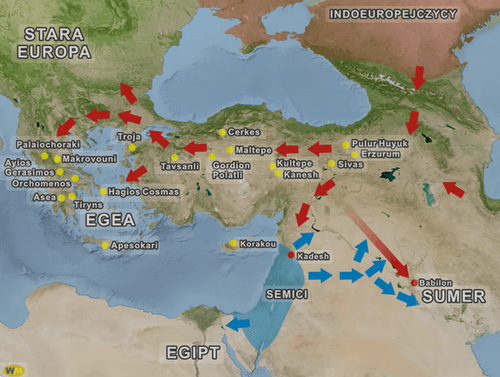 Ancient artCivilization and the culture based on it have a profound impact on the way individuals in a given society perceive the world. Culture encompasses not only technology, art, architecture, or religion, but also the distinction between good and evil, how we relate to strangers, the acceptance of failure, the ability to adapt to changing situations, and many other things that we ourselves are often unaware of. The process of acquiring individual characteristics through culture derived from one civilization or another is long and can take hundreds of years, but it always leaves its mark, regardless of our acceptance or denial.
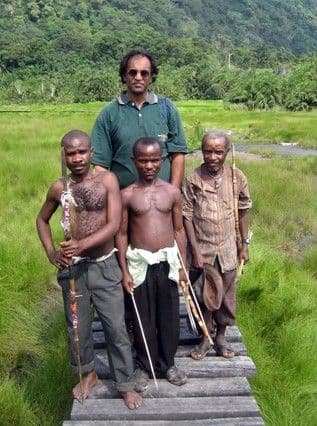 Pygmies from the tropical forests of Central AfricaPoles are thus different from Eskimos, North American Indians, Pygmies, Chinese, and other peoples. Unfortunately, most Poles, in their interactions with other nations, automatically assume that they think the same way, or so similarly that their culture, often completely alien and downright hostile to our Polish one, can be ignored. What about our neighbors across the eastern border? Is their culture similar to ours? From what civilization does Ukrainian culture originate?
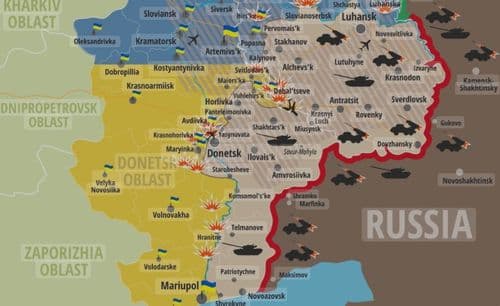 War in UkraineSince February 24, 2022, our "theater" on the Vistula has been perpetuating a constant narrative and propaganda claiming that Ukrainians have supposedly been our friends for generations. Those who propagate such slogans are either completely ignorant of Polish history, are covert agents working on behalf of our enemies, or are ultimately gullible political amateurs. Of course, I must point out that my analysis concerns the entire Ukrainian population from a historical perspective, and therefore may not apply to a certain, perhaps even larger, segment of it. Nevertheless, the conclusions drawn from it may be significant, especially in contacts with Ukrainians who adhere to the ideology promoted by the Ukrainian OUN.
In order to understand our relations with Ukrainians, we must first understand the complete diversity of cultures and civilizations: that is, our Polish culture, based on Latin civilization, and the culture in which Ruthenians, Cossacks, and ultimately their descendants, the Ukrainians, lived, originating from the Turanian civilization.
-431x500.jpg&w=1080&q=75) Feliks Koneczny (1862-1949)In describing both Latin and Turanian civilizations, I drew on studies by the Polish historian, publicist, and creator of the original concept of civilization, Feliks Koneczny (1862-1949). Koneczny distinguished several dozen historical civilizations, seven of which exist today: Arab, Byzantine (or Byzantine), Brahmin, Chinese, Latin, Turanian, and Jewish. Here are some of the historian's most important observations:
Feliks Koneczny (1862-1949)In describing both Latin and Turanian civilizations, I drew on studies by the Polish historian, publicist, and creator of the original concept of civilization, Feliks Koneczny (1862-1949). Koneczny distinguished several dozen historical civilizations, seven of which exist today: Arab, Byzantine (or Byzantine), Brahmin, Chinese, Latin, Turanian, and Jewish. Here are some of the historian's most important observations:
1. Civilizations are governed by civilizational laws.
2. Civilizations influence world history.
3. There is no universal civilization.
4. Civilizations differ in their social structure.
5. The greatest differences between civilizations occur in the sphere of ethics.
6. Every civilization has seven ethical concepts: duty, selflessness, responsibility, justice, conscience, attitude toward time, and attitude toward work.
7. Different civilizations must not be combined due to the contradictions between their ethics.
8. Attempts to combine civilizations must end either with one dominating the other or with the creation of an anti-civilizational blend incapable of survival.
9. According to Koneczny, in Poland (in the 1930s and 1940s) the dominant civilization was Latin, influenced by Jewish civilization and, to a lesser extent, Byzantine and Turanian civilizations.
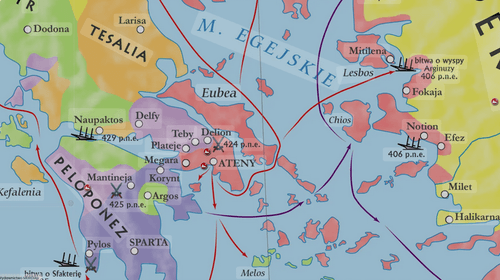 Ancient GreeceKoneczny writes about Latin culture:
[...] Latin civilization is one of the civilizations found in Europe, the only one that is indigenous in nature. The remaining civilizations (Byzantine, Jewish, and Turanian) are of Oriental origin. Therefore, there is no single, common European civilization. Latin civilization encompasses the societies of Western and Central Europe and America, and occurs where the dominant religion is Catholicism or Protestant denominations derived from it.
Koneczny argues that Latin civilization derives from three sources:
- ancient Greece, from which the pursuit of rational knowledge of truth, shaped by ancient philosophy, originated;
- ancient Rome, from which the concept of law as an expression of goodness and equity (so-called Roman law) originated;
- Christianity, which transformed these sources through its ethics.
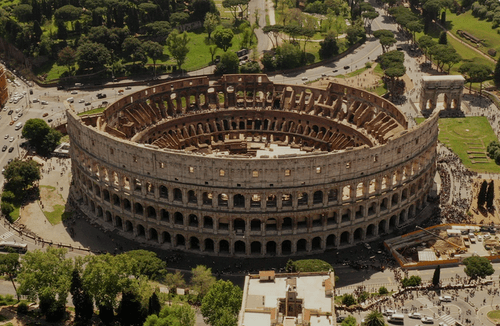 Roman ColosseumHere are Koneczny's most important observations regarding Latin civilization:
1. Latin civilization took shape in the Middle Ages, and the most important factor in its formation was the Catholic Church.
2. In this civilization, man is understood as a person, a free and rational subject.
3. Latin civilization imposes on rulers the same moral laws that apply to those under their rule.
4. The state is based on the nation, is limited in nature, and alongside it exist social organizations and local governments. It recognizes the duality of law (private and public law) and the superiority of ethics over law (law is supposed to be derived from ethics and subject to moral evaluation). In economics, it values private property, and the highest value is given to real property, especially land. In family law, it recognizes only monogamous marriage and the emancipation of the family from the rule of the clan.
5. It is a non-sacral civilization (how it differs from the Jewish and Brahmin civilizations) with the supremacy of spiritual forces (how it differs from the Turanian, Byzantine, Arab and Chinese civilizations).
 Feliks Koneczny's book Latin CivilizationLet's try to organize the information about Latin civilization according to Feliks Koneczny's interpretation:
1. A human being is a person, a free and rational subject.
2. The pursuit of truth is essential.
3. Law must be just and fair.
4. The authorities and subjects are subject to the same moral laws.
5. The state is based on the nation and is limited in nature.
6. The existence of private and public law is accepted, but must be derived from ethics and subject to moral evaluation.
7. Only monogamous marriages are recognized.
8. Latin civilization is not associated with religion, but with the superiority of spiritual forces.
The author of this concept, Feliks Koneczny, considers Latin civilization to be the most perfect of all, ensuring the fullest realization of the human individual. He believes that Polish culture is the fullest embodiment of Latin civilization and is closely linked to it. He also argues that other civilizations present in Poland (Jewish, Turanian and Byzantine) were culturally alien and harmful to it.
%252C%2520obraz%25201910-500x314.jpg&w=1080&q=75) Mongols at the walls of Vladimir (Turanian civilization), painting 1910Let's examine the Turanian civilization, from which the Ruthenians, Cossacks, and their descendants, the Ukrainians, originate.
Mongols at the walls of Vladimir (Turanian civilization), painting 1910Let's examine the Turanian civilization, from which the Ruthenians, Cossacks, and their descendants, the Ukrainians, originate.
According to Feliks Koneczny, the Turanian (steppe) civilization originated in Northeast Asia. However, it spread its influence to Central Asia, Muscovy, and Ruthenia. Northeast Asia encompasses North and South Korea, Japan, Mongolia, northeastern China, Siberia, and the Far East of Russia.
Koneczny writes that the Turanian civilization shifts all public life away from camp rule, which is fundamentally unethical. It centers around the leader, who is a "demigod," the master of life and death. According to Feliks Koneczny, the ruler is "the owner of the entire state, everyone and everything, and the entire population is in his thrall." It makes little difference whether this leader is a khan, a tsar, a first secretary, or a president.
 Khingis Khan, son of Yesugei Baatur, grandson of the first Mongol khan, KabulThe founder of the Mongol Empire, Genghis Khan, who lived from 1162 to 1227, is said to have expressed himself: [...] I feel the greatest joy in shedding the blood of my enemies and the tears of their women.
The peoples of Turanian civilization are regiments of warriors whose raison d'être is war and conquest. In times of peace, the peoples of this civilization fall into stagnation and inertia. The basis of the social order of Turanian civilization is an aggressive struggle for existence. The consequence is a military organization of society, with the guiding principle of unconditional obedience to a single ruler and his delegates – this encompasses all areas of life.
In his work "The Development of Morality," Feliks Koneczny wrote about Turanian civilization:
[...] The ruler's willfulness is the only source of law, and whoever removes him by sword, noose, or poison has the right to become a ruler just like him.
 Cossacks, Turanian civilizationLet's summarize the information about the Turanian civilization:
1. Camp life.
2. Lack of morality and ethics.
3. The ruler is the master of life and death, and absolute obedience to the leader is required.
4. Aggressive struggle for existence.
5. Military organization of society.
Knowing that Ukrainian culture, derived from the Turanian civilization, is the opposite of Polish culture, derived from Latin civilization, let's attempt a simplified analysis of the Ukrainian perspective on reality, based on the Turanian civilization, supplementing it with some values from the ideology of Ukrainian nationalists of the OUN, in connection with the continuation of the cult of Bandera in Ukraine.
1. Ukrainians are not guided by morality or ethics; the concepts of good and evil are relative to them.
2. The concept of property in the context of an aggressive struggle for existence leads to the conclusion that to possess property, it must be taken from someone else, preferably by violence and force.
3. Political problems can only be solved by war.
4. A Ukrainian will not use the words "please" or "excuse me" in relation to other (non-Ukrainian) nationalities unless it is directly related to pursuing one's own interests. Using these words in relation to a Ukrainian indicates weakness, inferiority, and servility, and evokes a feeling of contempt.
5. Boasting about helping a Ukrainian is an expression of utter stupidity, as the concept of gratitude is, at best, an unpopular feeling in Turanian civilization, especially when it concerns foreigners.
6. Non-Ukrainians will always be treated as potential enemies. If a Ukrainian opposes the ideology adopted by the leader, he will also be treated as an enemy.
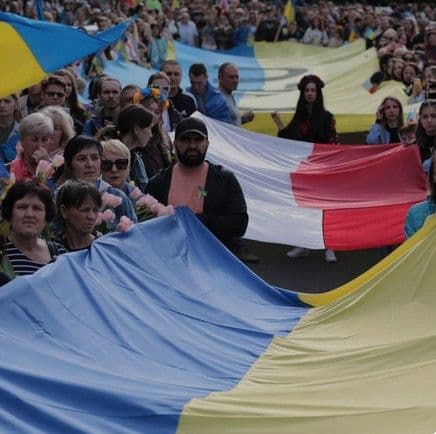 Ukrainians in Poland, contemporary timesOf course, you may disagree with some or even all of the analysis presented, but based on historical facts, the OUN ideology, and even observing the behavior of some Ukrainian politicians toward Poland, the above statements seem strongly justified. I will reiterate Feliks Koneczny's words: the civilizations present in Poland—Jewish, Turanian, and Byzantine—are culturally alien and harmful. Some might argue that the Ukrainians who "flooded" Poland after February 24, 2022, may change their culture and perception of the world, becoming more "compatible" with Polish culture. Unfortunately, the process of cultural change is inherently lengthy, and besides, Ukrainians have no intention of changing either their beliefs or their culture. The goal of this nation, which worships Bandera, is war and domination over conquered nations (the 10th commandment of Ukrainian nationalists). The only way to curb their aggression is to limit the number of emigrants, a fact that "our" rulers seem oblivious to. Instead of 49 Foreigner Integration Centers, it's definitely time to create Deportation Centers, while mass emigration in our country doesn't yet resemble the situation in Western Europe.
 Krzysztof Krawczyk and his musical piece "My Friend"Helping victims of war, persecution, and natural disasters is necessary, but governments cannot succumb to the moods and feelings of individual citizens. They should, above all, protect the common interest of their own citizens, that is, Poles.
Therefore, if someone, out of the "goodness of their heart," wants to share everything they have with Ukrainians, as in Krzysztof Krawczyk's song "Mój Przyjacielu," offer hospitality, donate a car, or even a guitar, they should carefully analyze the lyrics, which carry a crucial message about how such morbid hospitality ends. Besides, at least for now, everyone is a free person and has the right to their own opinions and decisions.
 Trump's negotiations with ZelenskyHere are my observations regarding the cultural differences between the Polish and Ukrainian peoples:
Thanks to understanding the foundations of Turanian civilization, which differs radically from Latin civilization, and the presented analysis of Ukrainians' perceptions of reality, I will attempt to determine what political actions should be taken towards Ukraine by the current and future rulers of our country. I will limit myself to the most important matters and reserve the right to express my opinions and suggestions, with which you may disagree.
1. All talks and negotiations should be conducted only from a position of strength, in accordance with the principle: Ukrainians respect a strong negotiator and despise a weak one.
2. The exhumation matter should be resolved unconditionally and without delay. It is a known fact that Germans and Jews have been conducting exhumations in Ukraine for many years.
3. A Ukrainian may be eligible for assistance only if they are a war refugee and only after a thorough verification process.
4. Fostering Poland's national interest requires a change in current policy. Politicians and government officials should act, among other things, to ensure the economic security of Polish citizens and the sovereignty of the state. The uncontrolled influx of Ukrainian social migrants must be halted, the practice of issuing PESEL numbers to every newly arrived Ukrainian must be halted, a sound social policy for refugees must be implemented, the unjustified subsidy for Ukrainian pensioners must be halted, the free supply of energy resources to Ukraine must be halted, and the transfer of weapons to Ukraine must be halted. This process leads to the disarmament of the Polish nation, perpetuating the conflict, and hindering peace talks.
5. Political and economic talks with Ukrainians must not be conducted on the basis of friendship or trust. Ukrainian politicians and officials only care about their own interests and could potentially even be our enemies.
 Image of chaos, Greek mythologyThe postulates presented are not only my own observations but also converge with the views of many politicians, economists, and historians outside the spheres of the currently ruling "elites." The last point, point 5, requires a deeper historical analysis and will therefore be discussed in subsequent articles of Wolf's Echoes. If the government of our small empire continues its current policy towards Ukraine, it will inevitably lead to the emergence of anti-civilization, i.e., barbarism and chaos in our once beautiful country.
This concludes episode 15, in which I briefly analyzed Latin and Turanian civilizations based on Feliks Koneczny's concept of civilization and my own observations. I cordially invite you to watch episode 16, titled The Muppet Show.
Image source: Wikipedia