 PL
PL EN
EN#16Muppet Show
Behind the scenes of the outbreak of the Orange Revolution in Ukraine.
 Banana Wars - United States military campaigns, occupation, and intervention in Central America and the Caribbean128 years ago, in 1898, the United States launched a series of military campaigns, occupations, and interventions in Central America and the Caribbean. Despite the rather amusing name, the "Banana Wars," the actions taken by the Americans did not involve pelting each other with bananas. The Banana Wars lasted from the end of the Spanish-American conflict and were a consequence of the Treaty of Paris, which brought Cuba and Puerto Rico under American control. Despite the innocuous-sounding name, the Banana Wars lasted 36 years, ending in 1934, when the Americans withdrew their troops from Haiti, and then-President Franklin Delano Roosevelt proclaimed the "Good Neighborhood" doctrine. Where did the term "Banana Wars" come from? It turns out that the name of the wars actually had a lot to do with bananas, as the party interested in waging these wars was the American United Fruit Company, which, taking advantage of US control over Central American and Caribbean countries, seized numerous banana, tobacco, and sugarcane plantations. Thus, private businesses manipulated the US government for financial gain. The US government itself exploited the Banana Wars for political purposes, expanding US spheres of influence and maintaining control of the Panama Canal.
The Banana Wars teach a simple lesson: "Whether private or public, American interests always come first."
-500x314.jpg&w=1080&q=75) The Orange Revolution in Ukraine (November 22, 2004 – January 23, 2005)Seventy years after the end of the Banana Wars, in 2004, a revolution broke out, not a war, but a revolution that also had a southern fruit in its name and lasted a mere two months. This is, of course, the "orange revolution." Where does this name come from, and why did the revolution erupt in a country with a climate rather unfavorable for growing these fruits? More interestingly, were the Americans, who had already ended a fruit war 70 years earlier, poking their noses into it?
The Orange Revolution in Ukraine (November 22, 2004 – January 23, 2005)Seventy years after the end of the Banana Wars, in 2004, a revolution broke out, not a war, but a revolution that also had a southern fruit in its name and lasted a mere two months. This is, of course, the "orange revolution." Where does this name come from, and why did the revolution erupt in a country with a climate rather unfavorable for growing these fruits? More interestingly, were the Americans, who had already ended a fruit war 70 years earlier, poking their noses into it?
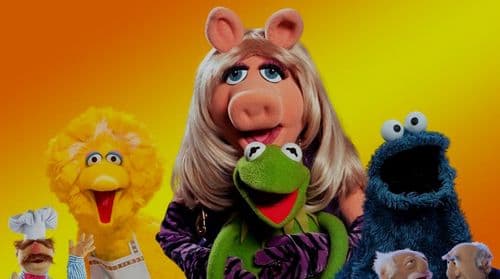 Puppet characters from The Muppet ShowFrom 1976 to 1981, the British-American television program The Muppet Show aired, featuring Muppets, puppets created by Jim Henson. The puppets performed specific functions and represented a wide range of human traits, which were evident in their behavior. Looking at the international political scene, and especially at the Polish political "theatre," one might get the impression that some government officials' behaviors resemble the characters from the Muppet Show.
Interestingly, while people holding important government positions change over time, their "theatrical" personas remain unchanged and, moreover, completely incorrigible. It turns out that people who find themselves in politics (not coincidentally) and play their "puppet" roles rarely care about the interests of the countries they represent, but always consider the plans of the "Kermit" figures representing the great powers.
 Kermit the Frog
 Gonzo
Gonzo
Are my observations correct? Let's check with a few examples:
1. Kermit the Frog — the main director and stage manager of the show. Responsible for the entire plan. These are advisors to presidents, such as Henry Kissinger and Zbigniew Brzeziński.
2. Miss Piggy — a charming pig, in love with Kermit and jealous of him. These are women serving as politicians, such as Victoria Nuland.
3. Scooter — the nephew of the theater owner, Kermit's assistant. These are ambassadors, such as Mark Brzeziński.
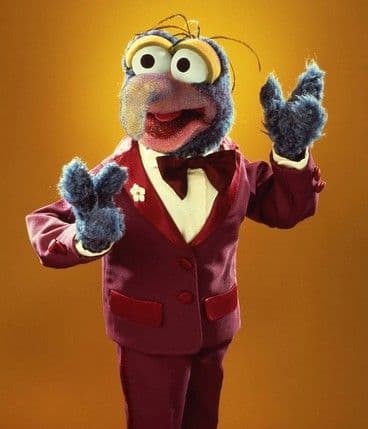
4. Gonzo — also known as the Great Gonzo or Gonzo the Great. These are presidents, such as Andrzej Duda.
5. Crazy Harry — a pyrotechnician and bomb effects expert. These are pro-war politicians. There are many more examples, but I'll leave that to your imagination.
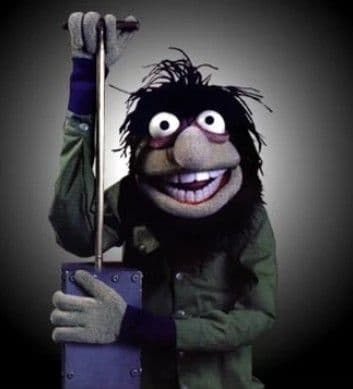 Crazy HarryOf course, every country has its Kermit, Gonzo, and other puppet characters. In this article, I won't delve into the topic of politics, conflicts of interest, or the backrooms of power in a global context. Instead, I'll limit my discussion to certain historical events that led to the current armed conflict between the Russian Federation and Ukraine.
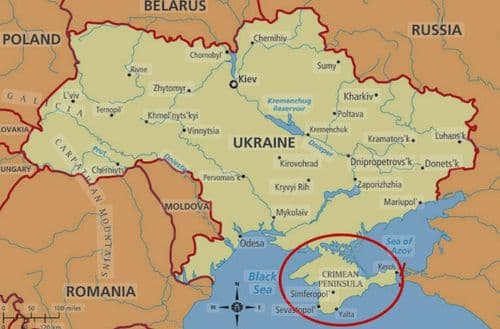 Annexation of Crimea, February 2014Wikipedia provides information frequently cited by mainstream media, defining the Russian-Ukrainian war as:
[...] the armed aggression of the Russian Federation against Ukraine, launched in February 2014. Initially, Russian actions took the form of a hybrid war, including military intervention in and annexation of Crimea, the war in Donbas, and the Kerch Strait incident.
The official narrative cites separatist uprisings in Ukraine as the cause of the conflict beyond the eastern border:
[...] The separatist uprisings in southeastern Ukraine, which marked the beginning of Russia's hybrid war against Ukraine, were the result of Russia's reaction to political changes following the mass protests on Maidan Square against the failure of then-President of Ukraine, Viktor Yanukovych of the pro-Russian Party of Regions, to sign an Association Agreement with the European Union.
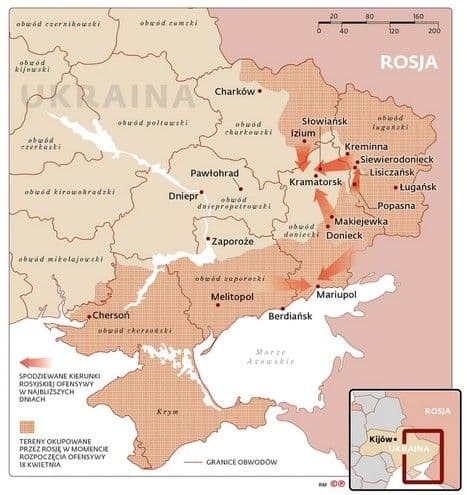 War in DonbasRegarding the war in Donbas, we read:
[...] In April 2014, the Armed Forces of the Russian Federation launched a hybrid warfare attack in the southeastern part of Ukraine, conducting direct military operations there. As a result, two internationally unrecognized entities were established in Donbas: the Luhansk People's Republic and the Donetsk People's Republic. The ongoing armed conflict resulted in the expulsion of approximately 30% of the population and an economic collapse in the region.
It is estimated that the consequences of the war in Donbas affected approximately 4.4 million people, and 40,000 residential buildings were destroyed. The Minsk Agreements were signed on September 9, 2014, and February 12, 2015, but they did not provide a lasting resolution to the disputed issues. Official sources also mention the shooting down of a passenger plane.
 Malaysia Airlines Boeing 777 shot down over Russia-Ukraine border, 298 killed[...] In July 2014, a Malaysia Airlines Boeing 777 passenger plane was shot down over territory controlled by the Donetsk People's Republic.
Information from non-governmental sources regarding the armed conflict between the Russian Federation and Ukraine seems to completely contradict the government's narrative. According to some geopolitical experts (e.g., Dr. Leszek Sykulski), the war beyond the eastern border is a proxy war waged by the United States and its allies against the Russian Federation, or more simply, Russia and its ally China.
-500x312.jpg&w=1080&q=75) The Orange Revolution in Ukraine (2004/2005)Let's attempt, within a limited scope, to analyze historical events and determine which version of the narrative is true.
The Orange Revolution in Ukraine (2004/2005)Let's attempt, within a limited scope, to analyze historical events and determine which version of the narrative is true.
Let's begin with the Orange Revolution in Ukraine, which lasted from November 22, 2004, to January 23, 2005. This revolution was a series of protests and political events in Ukraine caused by the "rigging" of the 2004 presidential elections by the then-ruling camp, represented by presidential candidate and Prime Minister Viktor Yanukovych, candidate of the pro-Russian Party of Regions. Yanukovych's main opponent in the election was Viktor Yushchenko from the opposition Our Ukraine Bloc. The protests' name comes from the color orange, which was the symbol of Viktor Yushchenko's campaign headquarters.
Gonzo
-500x304.jpg&w=1080&q=75) Viktor Yushchenko (born 1954)
Viktor Yushchenko (born 1954)
The question arises: were the presidential elections truly rigged, and if so, who would benefit most from proving this?
To answer this question, we need to take a closer look at the candidates for president of Ukraine.
Viktor Yushchenko, the main beneficiary of the proven election fraud, becomes president of Ukraine as a result of the Orange Revolution, a sort of Ukrainian "Gonzo." We find some general information about Yushchenko: he was born on February 23, 1954, in the village of Khoruzhivtsi in northeastern Ukraine, and that he is a Ukrainian economist and politician. Further information is much more interesting: from 1993 to 1999, Yushchenko served as chairman of the National Bank of Ukraine, from 1999 to 2001, he served as prime minister of Ukraine, and finally, from 2005 to 2010, he served as president of Ukraine.
From these few facts, it follows that Yushchenko held a very high position as prime minister in the Ukrainian government and was chairman of the National Bank. Viktor Yushchenko's biography lacks any outstanding academic achievements that would justify his claim to the position of prime minister or bank president. His recent position suggests ties to international bankers, particularly central banks (a situation analogous to that of President Adam Glapiński).
-450x500.jpg&w=1080&q=75) Kateryna Yushchenko (born 1961 in Chicago)Keeping in mind the fundamental truth that nothing happens by chance in politics, let's look for the reasons behind Viktor Yushchenko's brilliant career. Here we find an ace up his sleeve: Viktor Yushchenko is married to Kateryna, a Ukrainian born in Chicago, who worked at the White House and the US State Department, among other places, and chaired various charitable foundations. It also turns out that Viktor Yushchenko's older brother, Petro, was involved in business and served as a member of parliament in the Verkhovna Rada.
Kateryna Yushchenko (born 1961 in Chicago)Keeping in mind the fundamental truth that nothing happens by chance in politics, let's look for the reasons behind Viktor Yushchenko's brilliant career. Here we find an ace up his sleeve: Viktor Yushchenko is married to Kateryna, a Ukrainian born in Chicago, who worked at the White House and the US State Department, among other places, and chaired various charitable foundations. It also turns out that Viktor Yushchenko's older brother, Petro, was involved in business and served as a member of parliament in the Verkhovna Rada.
These few biographical facts explain not only Yushchenko's astonishing political career but also indicate who was directly involved in promoting him to the presidency and thus instigating the Orange Revolution.
 Members of the Congress of Ukrainian Nationalists during one of the demonstrations in UkraineSince 2002, Yushchenko has led a coalition of center-right groups called the Our Ukraine Bloc, which included two moderate nationalist parties, a liberal party, the Solidarity Party of oligarch Petro Poroshenko, and the Congress of Ukrainian Nationalists. Unfortunately, the specter of the OUN refuses to leave Ukraine even in modern times, and the involvement of the United States in the conflict beyond the eastern border is quite real. However, before I present my conclusions and answer the question posed, I will examine Viktor Yushchenko's political opponent, Viktor Yanukovych.
Gonzo-369x499.jpg&w=750&q=75) Viktor Yanukovych (born 1950)
Viktor Yanukovych (born 1950)
Yanukovych was born on July 9, 1950, in Yenakiyevo, Donetsk Oblast. Like Yushchenko, he is a Ukrainian politician, but has a significantly higher education, as an engineer and university lecturer. Further information:
[...] From 1997 to 2002, he was the chairman of the Donetsk Regional State Administration, a member of parliament, and from 2003 to 2010, leader of the Party of Regions. From 2002 to 2005 and from 2006 to 2007, he served as Prime Minister of Ukraine, and from 2010 to 2014, President of Ukraine.
The information provided indicates Yanukovych's higher education and much greater political experience than his political opponent, Yushchenko. This is confirmed by other facts, such as graduating from a mining technical school in 1973 and obtaining a mechanical engineering degree from the Donetsk Polytechnic University in 1980. Moreover, in 2001, Yanukovych earned a master's degree in international law from the Ukrainian Academy of Foreign Trade and then completed his doctorate at the Institute of Economic and Legal Research of the National Academy of Sciences of Ukraine in Kyiv. Viktor Yanukovych was the leader of the Party of Regions, a Ukrainian political party described as pro-Russian. Even before the Orange Revolution, Ukraine was divided into two parts: the western part associated with the OUN, and the eastern part, whose population is more pro-Russian. Information to date seems to indicate that the 2004/2005 elections were not necessarily rigged and that the Orange Revolution may have been triggered by "Kermit" from the United States.
 Lady Piggy
-337x425.jpg&w=750&q=75) Victoria Nuland (born 1961 New York)
Victoria Nuland (born 1961 New York)
Was this really the case? We'll find the answer to this question by analyzing the biography of another character from our "Muppet Show," Victoria Nuland.
Victoria's biography is much more modest than the previous characters. [...] She was born in 1961 in New York City to a Jewish family.
Despite her very modest biography, Nuland has experienced an astonishing political career:
[...] As a diplomat, she served in missions in China (Guangzhou) and Russia (Moscow). From 2005 to 2008, she served as the US Permanent Representative to NATO, also served as spokesperson for the State Department, and held the position of Assistant Secretary of State for European and Eurasian Affairs.
Victoria Nuland's list of political positions is very long and points to powerful sponsors. Her biography also states that, in addition to English, Victoria speaks French and Russian.
-500x328.jpg&w=1080&q=75) Stand with Ukraine Foundation DemonstrationWith such an astonishing political career, there can and have been blunders and ambiguous statements. For example, on December 13, 2013, during a U.S.-Ukraine Foundation conference, Nuland, as Assistant Secretary of State for European and Eurasian Affairs, said:
Stand with Ukraine Foundation DemonstrationWith such an astonishing political career, there can and have been blunders and ambiguous statements. For example, on December 13, 2013, during a U.S.-Ukraine Foundation conference, Nuland, as Assistant Secretary of State for European and Eurasian Affairs, said:
[...] Since Ukraine gained independence in 1991, the United States has supported Ukrainians in building democratic skills and institutions, promoting civic participation, and good governance, which are prerequisites for Ukraine to fulfill its European aspirations. We have invested over $5 billion to help Ukraine achieve these and other goals that will ensure a secure, prosperous, and democratic Ukraine.
This statement sparked widespread online commentary, clearly indicating U.S. support for anti-government movements in Ukraine. Of course, Polish pro-government portals such as demagog.org.pl claimed that it was not true that the US had spent $5 billion on destabilizing the situation in Ukraine, but rather on building and developing democratization in the country.
Victoria Nuland (born 1961 New York)Let's try a simple analysis of Victoria Nuland's statement:
1. The amount of US investment in Ukraine is an indisputable fact—$5 billion.
2. Building democratic institutions and—moreover—good government doesn't indicate the specific purpose of this money. What kind of government is good? Is it pro-Russian, or perhaps pro-American? Besides, modern "democracy" is merely an illusion, as many Poles realize.
3. Nuland speaks of achieving these and other goals. If these first goals were mentioned earlier, what are these other goals?
4. Finally, the statement that the US wants to ensure a safe, prosperous, and democratic Ukraine. These are tired demagogic slogans. What guarantees that the United States will ensure Ukraine's security and prosperity, not to mention democracy? Or perhaps a much better solution for Ukraine would be to conclude peace and cooperate economically with the culturally closest Russians?
Victoria Nuland's statement is ambiguous and unfortunately full of propaganda slogans and demagogy. It clearly points to a political struggle for influence in Ukraine, a struggle implicitly directed against the Russian Federation. But can Victoria herself be blamed for the content of her speech, which was undoubtedly prepared, likely dictated, by entirely different people?
This concludes episode 16, in which I presented a simplified biographical analysis of three characters from the global Muppet Show who played important roles in the Orange Revolution in Ukraine. I cordially invite you to watch episode 17, titled "Enigmatic Snipers."
Photo source: Wikipedia