 PL
PL EN
EN#17Enigmatic Snipers
Historical events leading to the outbreak of riots and unrest on the Ukrainian Maidan.
%2520%252C%2520francuski%2520pisarz%2520i%2520dramaturg-412x500.jpg&w=828&q=75) Alexandre Dumas (born Dumas Davy de la Pailleterie in 1802 – died 1870), French writer and playwright182 years ago, in 1844, Alexandre Dumas wrote his most remarkable work, The Count of Monte Cristo. The action takes place between February 24, 1815, and October 5, 1838, and takes place at the Château d'If, Marseille, Paris, Rome, the island of Monte Cristo, and other locations in France and Italy.
Alexandre Dumas (born Dumas Davy de la Pailleterie in 1802 – died 1870), French writer and playwright182 years ago, in 1844, Alexandre Dumas wrote his most remarkable work, The Count of Monte Cristo. The action takes place between February 24, 1815, and October 5, 1838, and takes place at the Château d'If, Marseille, Paris, Rome, the island of Monte Cristo, and other locations in France and Italy.
Seeking inspiration for the plot of his future novel, Dumas consulted the Memoirs extracted from the archives of the Parisian police by Jean-Péuchet. In 1807, shortly before his wedding to the wealthier Marguerite Vigoroux, the protagonist of Peuchet's work, François Picaud, was branded an English spy and imprisoned. This was the result of an anonymous tip-off from three acquaintances, to whom he had shared his life plans.
%2520szewc%2520z%2520Nimes%252C%2520Francja-500x345.jpg&w=1080&q=75) François-Pierre Picaud (allegedly the Count of Monte Cristo from Alexandre Dumas's novel) a shoemaker from Nimes, FrancePicaud spent seven years in the fortress at Fenestrelle, where he cared for a fellow prisoner, a seriously ill Italian prelate. Before his death, the priest told him in Milan where his treasure was hidden. In 1814, Picaud found the treasure and returned to Paris, using the name Joseph Lucher. He learned the reasons for his imprisonment and that his former fiancée had married the main author of the denunciation, the innkeeper Loupian.
François-Pierre Picaud (allegedly the Count of Monte Cristo from Alexandre Dumas's novel) a shoemaker from Nimes, FrancePicaud spent seven years in the fortress at Fenestrelle, where he cared for a fellow prisoner, a seriously ill Italian prelate. Before his death, the priest told him in Milan where his treasure was hidden. In 1814, Picaud found the treasure and returned to Paris, using the name Joseph Lucher. He learned the reasons for his imprisonment and that his former fiancée had married the main author of the denunciation, the innkeeper Loupian.
Posing as a servant, he managed to ruin the Loupian family and murder two of the co-authors of the denunciation, Chambard and Solari. He then killed Loupian himself, but was constantly watched by the final informer, Allut, who also killed him that same evening. Allut then fled to England and, shortly before his death, told the Catholic priest the whole story, authorizing him to report it to the French police.
-385x500.jpg&w=828&q=75) Jean Henri Latude (1725–1805)
Jean Henri Latude (1725–1805)-390x500.jpg&w=828&q=75) Edme-Samuel Castaing (1796 – 1823)
Edme-Samuel Castaing (1796 – 1823)
Some scholars of Dumas's life and work claim that the writer was inspired by the story of Masers Latude, imprisoned there in 1748 as a result of a court intrigue for which Madame de Pompadour secured his conviction. Latude escaped from prison numerous times.
Another text that may have influenced the writer was Auguste Arnould's little-known work, The Road to Fortune, which explores a similar theme of betrayal and revenge. The protagonist of that work was also wrongly accused of a political crime, and his fiancée married the man who had landed him in prison. Dumas based the character of prosecutor de Villefort's second wife, a poisoner, on the true story of the murderer Edme-Samuel Castaing (a French doctor who committed murders with morphine).
The enormous wealth of the man who later claimed to be the Count of Monte Cristo was a huge, inscrutable mystery to the novel's negative characters, and one may ask whether in more modern times it happens that someone suddenly becomes a millionaire or even a billionaire without winning the lottery or the Eurojackpot.
 Kyiv, city authorities are clearing Independence SquareFollowing the Orange Revolution, in late 2013, riots and protests erupted in Ukraine on the Maidan Square in Kyiv. What caused these riots, and what was their purpose?
To answer this question, we need to understand a few historical facts related to this period. Let's go back to March 30, 2012, when the Association Agreement between Ukraine and the European Union was initialed in Brussels. However, the agreement was not signed due to "failure to respect the rule of law" and the imprisonment of Yulia Tymoshenko and Yuri Lutsenko. It soon became clear that Yulia Tymoshenko played a key role in Operation Maidan.
-323x500.jpg&w=750&q=75) Yulia Tymoshenko (born 1960)
Yulia Tymoshenko (born 1960)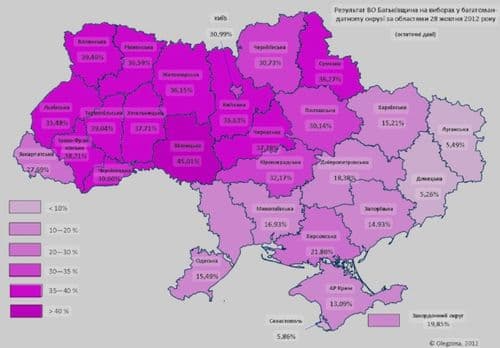 Support for the Batkivshchyna party in 2012
Yulia Tymoshenko was born on November 27, 1960, in Dnipropetrovsk. Yulia Tymoshenko's political career reveals that she was active as a Ukrainian politician, serving as Deputy Prime Minister and even Prime Minister of Ukraine in 2005 and from 2007 to 2010. This information confirms very strong support from undisclosed circles. There is also significant information that Yulia founded and even served as leader of the Batkivshchyna (Fatherland) party and the Yulia Tymoshenko Bloc. The party itself is a center-right and moderate nationalist party that, for a time, served as the main opposition party, collaborating with other groups to oppose Yanukovych's rule.
The party also actively participated in the Maidan events, which led to the release of its leader and the formation of a new government in February 2014. Information about Yulia's political career indicates that she openly supported the Ukrainian nationalist movement and held a staunchly anti-Russian stance, opposing Yanukovych's government. The question remains: who was interested in Yulia Tymoshenko's political career and financed her achievements?
 Mythical treasureYulia's biography contains a shocking revelation. Before embarking on her political career, Tymoshenko worked in the energy industry, becoming one of the wealthiest people in the country. In 2005, after the Orange Revolution, she became the first woman to serve as Prime Minister of Ukraine. Where did Yulia's wealth and this surprising political rise come from, especially as a woman? Her extraordinary wealth likely stems not from honest work, but from the corruption that has permeated Ukraine for decades. If we reject the hypothesis that Yulia Tymoshenko discovered a vast treasure, we are left with the assumption that she received a massive bribe, which quickly catapulted her to the position of Prime Minister of Ukraine.
%252C%2520ameryka%25C5%2584ski%2520inwestor%2520gie%25C5%2582dowy%2520pochodzenia%2520w%25C4%2599giersko-%25C5%25BCydowskiego%252C%2520za%25C5%2582o%25C5%25BCyciel%2520%2520Fundacji%2520im.%2520Stefana%2520Batorego-372x500.jpg&w=750&q=75) George Soros (born 1930), American stock investor of Hungarian-Jewish descent, founder of the Stefan Batory FoundationWas Yulia Tymoshenko a protégé of Americans? Possibly through George Soros, who has unlimited financial resources and influence over non-governmental organizations worldwide?
George Soros (born 1930), American stock investor of Hungarian-Jewish descent, founder of the Stefan Batory FoundationWas Yulia Tymoshenko a protégé of Americans? Possibly through George Soros, who has unlimited financial resources and influence over non-governmental organizations worldwide?
Yulia Tymoshenko's official biography reveals that her father abandoned the family when she was three years old, and her mother worked at the headquarters of a taxi company. Yulia graduated with a degree in economics and then worked as an economist in the arms industry. She and her husband ran a video rental store. The biographical information provided provides no clue as to the origin of Ms. Tymoshenko's wealth, and it is doubtful that her income from video rentals would have made her a Ukrainian millionaire (or billionaire).
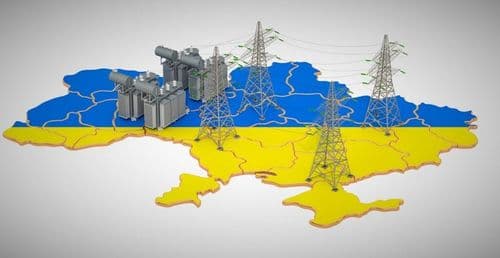 Energy Systems of UkraineWe learn about the company where Yulia Tymoshenko worked as an economist that after Ukraine gained independence in 1991, she negotiated government arms contracts. As you might guess, contracts signed with the Americans. From that moment on, Yulia's extraordinary financial and political rise began.
In 1996-1997, Yulia headed the United Energy Systems of Ukraine. She earned a candidate of economics degree and defended her doctorate at the Kyiv National University of Economics in 1999. This unassuming economist suddenly published 50 scientific papers. My dears, miracles do happen, but this was certainly not Yulia Tymoshenko's case.
 Yulia Tymoshenko during her trialYulia Tymoshenko's political career soon began to face difficulties. In December 1999, Yulia served as Deputy Prime Minister in Viktor Yanukovych's government, and from 2000, she headed the government's Fuel and Energy Committee. In August of that same year, her husband was temporarily arrested on charges of mismanagement of the United Energy Systems of Ukraine. In the fall of 2000, an investigation was launched against Yulia, and she was dismissed in January 2001. In February 2001, Yulia Tymoshenko was temporarily arrested on corruption charges, but in March, a court in Kyiv found the charges unfounded, and Yulia was released. The information presented points to corrupt activities by Yulia, whose wealth, incredible socio-political career, and the actions of overseas patrons granted her immunity from prosecution in the corrupt judicial system.
 Yulia Tymoshenko in prison in KharkivDespite temporary setbacks and an alleged criminal past, Yulia continued to climb the political ladder. In 2010, she became a presidential candidate against Viktor Yanukovych, ultimately losing. On March 3, 2010, the Verkhovna Rada of Ukraine passed a vote of no confidence in Yulia Tymoshenko's government, and on March 11, parliament dissolved her government. In the following months, Yulia was prosecuted on charges of embezzlement. In October 2010, Yulia was found guilty of causing losses to the Naftogaz Ukrainy enterprise, sentenced to seven years in prison, and imprisoned in a penal colony in Kharkiv. Immediately after Yulia Tymoshenko's imprisonment, her protectors began to act, including the European Parliament and the European Court of Human Rights. Although the latter unanimously found the former prime minister's arrest to be unlawful and unjustified, it dismissed the charges of alleged inhumane treatment.
 A plaque commemorating the entrepreneur Yevhen ShcherbanIt turns out that corruption and embezzlement weren't the only charges against Yulia. In October, legal proceedings were initiated against Yulia Tymoshenko for her involvement in the 1996 murder of MP and businessman Yevhen Shcherban. In January 2013, she was charged with ordering the crime, but the proceedings were suspended due to lack of evidence. Yulia didn't spend seven years in prison because on February 21, 2014, the Ukrainian parliament passed amendments to the criminal law, which resulted in Yulia being released the next day. Well, if formally it can't be done, then the laws can be changed. The question remains, however, why did the riots on Maidan Square occur?
-500x406.jpg&w=1080&q=75) Viktor Yanukovych (born 1950)While Yulia Tymoshenko was in prison, on September 3, 2013, President Yanukovych called on parliament to pass legislation that would enable Ukraine to meet the conditions necessary to achieve positive results at the November Eastern Partnership Summit in Vilnius, including the signing of an Association Agreement with the European Union.
Viktor Yanukovych (born 1950)While Yulia Tymoshenko was in prison, on September 3, 2013, President Yanukovych called on parliament to pass legislation that would enable Ukraine to meet the conditions necessary to achieve positive results at the November Eastern Partnership Summit in Vilnius, including the signing of an Association Agreement with the European Union.
Despite Viktor Yanukovych's positive attitude towards Ukraine's accession to the European Union, the demands of the Brussels negotiators proved unrealistic. The Eurocrats envisioned Ukraine redirecting Kyiv's politics and economy away from Russia and toward Europe. Furthermore, the EU demanded the release of former Prime Minister Yulia Tymoshenko, who had been convicted of economic crimes.
Meeting the EU's demands threatened the collapse of the Ukrainian economy due to its strong ties to Russia and its legal system. Financial aid offered by the EU (in the form of loans) would not offset the potential losses. Russia's offer to Ukraine proved far more favorable than the dubious benefits of Ukraine's EU accession. Moscow proposed buying back Ukrainian bonds for $15 billion and maintaining discounts on gas supplies, which can be estimated at several billion dollars annually. Therefore, after much hesitation, President Yanukovych decided to abandon the previously negotiated Association Agreement. It soon became clear that the rejection of unfavorable terms in negotiations with the European Union had become a pretext for initiating protests in Ukraine, which later escalated into riots involving gasoline bottles and firearms.
 Ukrainian "Tryzub"The question arises, however, whether Maidan was a spontaneous rebellion against Viktor Yanukovych's policies, or perhaps a precisely executed and well-prepared "Kermit" operation from Washington and the EU's "gray eminences"?
We learn about the planned course of the Maidan riots from an article in the official Ukrainian newspaper "Day of Zaporizhzhia" from its February 2, 2014 issue. The author of the article, relying on an anonymous informant from the Security Service of Ukraine (SBU), wrote that:
[...] law enforcement agencies constantly monitored radical organizations such as the Right Sector, the Social National Assembly, and the All-Ukrainian Union "Trident" named after Stepan Bandera, and knew that they were financed by Western pro-Ukrainian institutions established by the intelligence services of NATO member states. Experienced Western analysts specializing in developing strategies for the development of color revolutions came to Ukraine and helped establish coordination centers for militant groups. The newspaper portrayed opposition leaders as henchmen of the West and the United States. During the Maidan, incidents occurred in which unknown snipers secretly killed both police officers and protesters participating in the demonstrations.
-259x340.jpg&w=640&q=75) Catherine Ashton (born 1956)
Catherine Ashton (born 1956)-259x340.jpg&w=640&q=75) Urmas Paet (born 1974)
Urmas Paet (born 1974)
Shortly after the coup, a transcript of a conversation between Estonian Foreign Minister Urmas Paet and EU Foreign Minister Catherine Ashton appeared in the media. In the conversation, Paet, citing the well-known Maidan activist, doctor Olga Bohomolets, spoke of the same individuals shooting at police officers and protesters. The Estonian Foreign Ministry confirmed the authenticity of this conversation, which was likely intercepted by Russian intelligence services.
Here is an excerpt from the conversation:
Paet: Olga also mentioned this... According to all the information we have, the people killed by snipers, from both sides, both police officers and people on the street... The same snipers were at work, killing people from both sides.
Ashton: Yes... it's terrible.
Paet: She showed me photographs and told me [...] about one type of bullet. And it's absolutely alarming that the new coalition refuses to conduct a thorough investigation into the exact circumstances of what happened. Gradually, the conviction is growing that it wasn't Yanukovych who was behind these snipers, but someone from the new coalition.
Ashton: I think this information needs to be addressed. It hasn't been mentioned. But it's interesting. Oh my God... On March 7th, an investigation into the Maidan snipers was launched.
-433x335.jpg&w=1080&q=75) Oleksandr Makkhnitsky (born 1970)
Oleksandr Makkhnitsky (born 1970) Maidan, special units in action
Two weeks later, Ukrainian Prosecutor General Oleg Mahnitsky announced that the snipers had been identified, but did not provide their names. Mahnitsky revealed only that they were all Ukrainians serving in Berkut. Oleg's statement does not resolve the matter, as Berkut became a scapegoat for the events on Maidan, and in fact, anyone could have fired the shots, including officers of the special forces of the Internal Troops, which also protected the new government.
This concludes Episode 17, in which I presented the historical events leading up to the outbreak of riots and unrest on Ukraine's Maidan. I also mentioned unknown snipers killing people on both sides of the conflict. I cordially invite you to watch Episode 18, titled "The Meddling Government."
Photo source: Wikipedia